


Understanding and protecting Tanzania’s chameleons
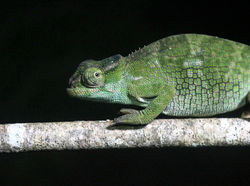
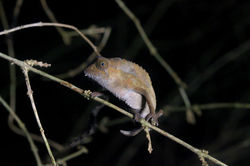
With 47 recorded species, Tanzania is home to the greatest diversity of chameleons in Africa and nearly 20 per cent of the world’s known species. Much of this biological richness is concentrated in the Eastern Arc Mountains, a forested mountain range recognised as one of Africa’s most remarkable biodiversity hotspots.
This region is of exceptional importance for conservation as it is home to all the chameleon species currently considered threatened in Tanzania. Within these mountains, the Usambara Mountains are a major priority, as they alone are home to more than half of the country’s threatened chameleon species.
Despite their ecological importance, many species remain poorly studied. Knowledge of their distribution, ecology and the threats they face is often limited, complicating the implementation of effective conservation measures.
In light of this, the Chameleon Conservation Centre (CCC) has launched the Kinyonga Programme, an international initiative dedicated to the study and conservation of Tanzania’s chameleons. The term ‘Kinyonga’, which means ‘chameleon’ in Swahili, reflects the programme’s commitment to building sustainable conservation based on collaboration with Tanzanian stakeholders.
Developed in partnership with the Women in Conservation Organisation (WICO), a Tanzanian organisation committed to biodiversity conservation and strengthening the role of women in conservation, the programme combines scientific research, applied conservation, local capacity-building and awareness-raising.
 |  |  |  |
|---|
Our ambition
To establish a leading platform dedicated to the research and conservation of Tanzanian chameleons, with a view to making a lasting contribution to the preservation of one of Africa’s most remarkable herpetological heritages.
Our areas of focus
Scientific research
Field surveys, ecological studies, spatial analyses and the production of data aimed at improving our understanding of species and their habitats.
Building local capacity
Training for Tanzanian students and young professionals, with a particular focus on promoting women in conservation careers.
Applied conservation
Identifying priority populations and habitats, supporting protected area managers, and developing science-based conservation recommendations.
Raise awareness and promote
Production of photographs, videos and educational resources designed to raise awareness of Tanzania’s chameleons and the challenges facing their conservation.
A scalable project platform
The Kinyonga Programme was designed as a platform capable of progressively developing a range of complementary projects focusing on threatened species, habitat fragmentation, ecological connectivity, ecosystem restoration and the training of future conservation practitioners.
This approach enables initiatives to be tailored to the needs identified on the ground and to emerging conservation priorities.
 |  |  |  |
|---|
An initial phase in the Usambara Mountains
The pilot phase of the programme is focused on the Usambara Mountains in north-eastern Tanzania.
This region alone is home to more than half of Tanzania’s threatened chameleon species, some of which are among the most endangered in Africa. This biodiversity hotspot is now one of the country’s top conservation priorities. The Amani (Eastern Usambara) and Magamba (Western Usambara) forest reserves have been selected as the programme’s first sites of intervention.
In the long term, activities may be extended to other ranges in the Eastern Arc Mountains and then to other priority regions in Tanzania.

Endangered species in Tanzania

Rhampholeon acuminatus

Rhampholeon beraduccii

Kinyongia magomberae
Kinyongia matschiei
Kinyongia multituberculata
Kinyongia tenuis
Kinyongia vosseleri
Rhampholeon spinosus
Rhampholeon temporalis
Rhampholeon viridis
Trioceros laterispinis
 |  |  |  |
|---|
Building sustainable conservation
The Kinyonga Programme believes that biodiversity conservation cannot be sustainable without the development of local skills. Working alongside WICO, the programme helps to train a new generation of Tanzanian conservationists, whilst strengthening women’s participation in research, fieldwork and leadership.
By combining science, conservation and local capacity-building, the programme aims to make a lasting contribution to the protection of Tanzania’s chameleons and their habitats.
20%
the world’s chameleon species
47
species recorded in Tanzania
100%
endangered species in the Eastern Arc Mountains
Women & Conservation
local expertise from women
Project news


Partners and donors

Supporting this project means investing in a scientific, ethical and sustainable approach to biodiversity conservation.